
According to Minister of Economic Affairs and Industry Erkki Keldo, the investment will help accelerate the launch of high-value-added research and development activities in Estonia. “Although Estonia stands out in the development of new technologies, one of our biggest challenges so far has been the lack of testing capacity necessary to achieve industrial level. Today's decision will enable the creation of support infrastructure and research and development capacity in three new areas, which will help bring technologies developed in the laboratory into practical production,” explained the minister.
According to Keldo, the areas were selected after a thorough analysis, communication with companies and market mapping. “These are the most commercially promising areas, in which Estonian companies are also interested in investing. Estonia's strong IT and technology sector will definitely give us an advantage,” added the minister.
According to Aigar Vaigu, Chairman of the Board of Metrosert, Metrosert has been in constant communication with companies and based on their needs when developing applied research areas. “We work closely with companies, universities and research organizations to ensure that our services and infrastructure meet their needs and enable their innovative ideas to be implemented. Applied research helps to increase the competitiveness of both our companies and the entire Estonian economy, and the goal is to support them in this in the best possible way,” said Vaigu.
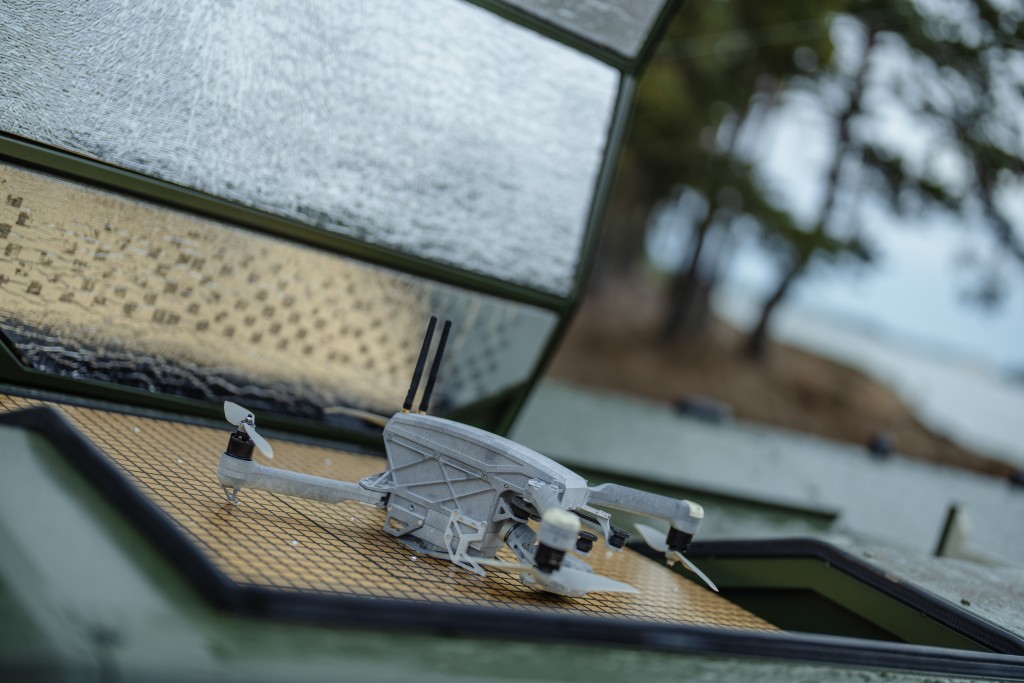
In the field of drone technologies, RUK supports the development of unmanned aerial vehicles in Estonia, offering competence in drone technologies, testing and certification services, and support in the implementation of innovative solutions. This is a rapidly developing and promising field, supported by technological advances in sensors, artificial intelligence, data processing and materials.
Rainer Kivimäe, Head of Drone Technologies at Metrosert, acknowledged that the development of drones is of strategic and economic importance for the Estonian state, supporting economic growth and security. “We focus on research and development activities and the establishment of laboratory capabilities that cover the entire life cycle of drones,” said Kivimäe. “There is great interest from entrepreneurs in the internal and external laboratories being created, including the electromagnetic compatibility (EMC) of drone technologies, the climate chamber and the outdoor test area laboratories. Today, we offer entrepreneurs consulting and measurement services in the field of drone technologies and biorefining. Full-scale cooperation will start after the laboratory infrastructure is completed.”
The development of the hydrogen technologies field is characterized by the growing need for a sustainable energy economy and renewable energy sources. The launch of the hydrogen technology field will create and maintain an ecosystem in the field and support companies operating in Estonia in creating internationally competitive services, products and technologies.
According to Dr. Rainer Küngas, Chief Technology Officer of Stargate Hydrogen, Estonia’s ambitious green goals currently require widespread purchasing of environmentally friendly technologies in Estonia. “But this does not have to be the case. For example, there are a number of emerging and rapidly developing hydrogen technology companies in Estonia that could supply some of the needed technology and even turn Estonia into a hydrogen technology exporting country. However, a very important part of the hydrogen technology development process is the thorough testing of products under operating conditions to ensure their reliability and safety. It is in this area that the applied research center established at Metrosert has a key role to play in Estonia,” said Küngas.
Launching the autonomous vehicle field in cooperation with the Estonian Transport Board will enable the legally compliant development of self-driving vehicles and their certification across the European Union in Estonia, thereby also making a clear contribution to road safety. The goal of Metrosert’s self-driving vehicle laboratory is to become a leading recognized testing and development center in Europe, where it is planned to establish a corresponding field laboratory, and where all this is made possible by a legal framework that supports innovation and ensures human safety.
The research and development activities of the Applied Research Center focus on five areas: biorefining, drone technologies, autonomous vehicles, hydrogen technologies and health data. The first area of activity was biorefining, which allowed new activities to be started in the field of wood chemistry and biomass valorization in general. The government allocated 5 million euros to it.
The Applied Research Center (RUK) was established at AS Metrosert in 2023 as a research and development unit and its goal is to support Estonian companies in developing knowledge-intensive products and services. The main task of the center is to help companies bring innovative ideas to the market and reach international markets more successfully through groundbreaking products, services and innovations. Metrosert acts as a bridge between companies and science, promoting cooperation and sustainable growth.

